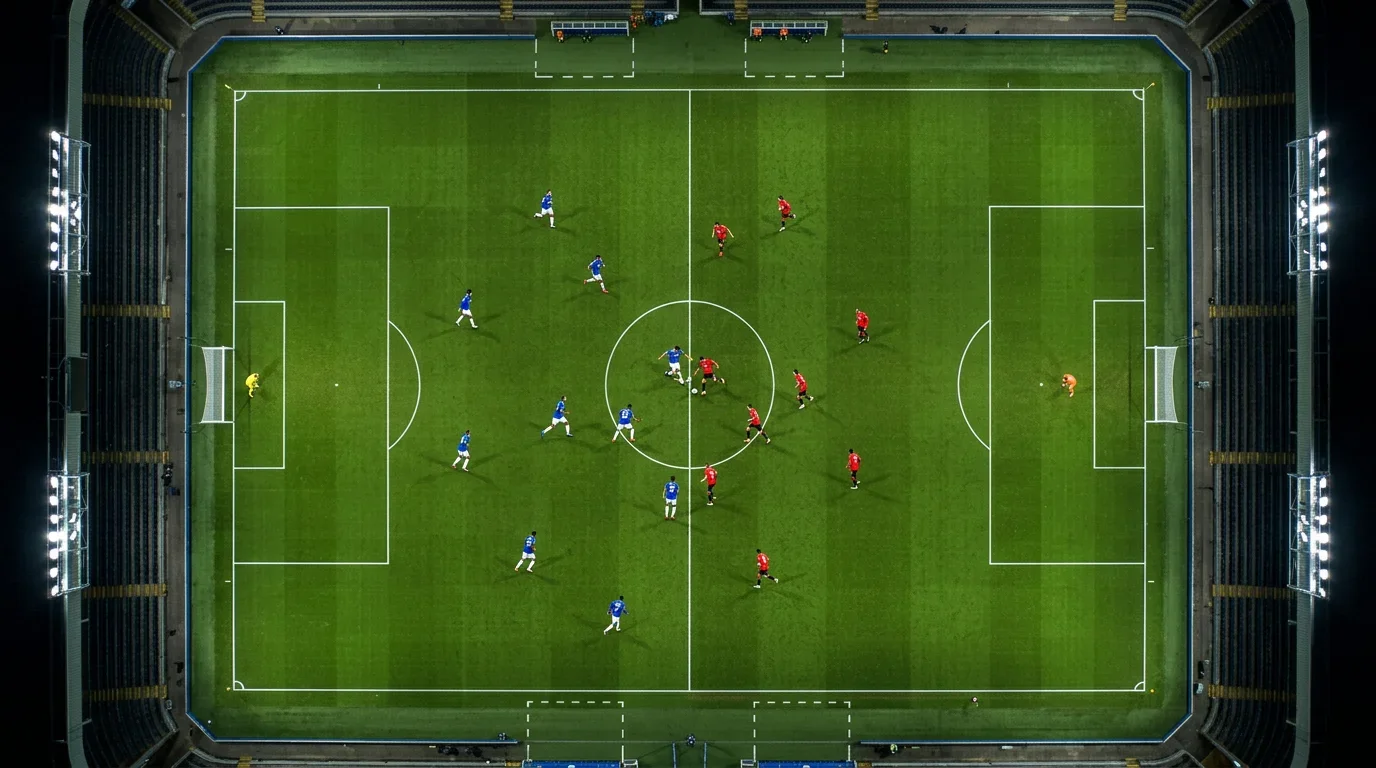
Live Betting in-Play — Estratégias de Apostas ao Vivo em Portugal 2026
 Available in US
Índice de conteúdos
- Apostas ao Vivo vs Pré-Jogo — Comparação de Margens e Velocidade de Odds
- Como ler a movimentação de odds ao vivo e o que ela sinaliza
- Cash out: quando usar, quando recusar e o seu custo real
- Mercados in-play com maior ineficiência: os que os dados apontam
- Gestão de banca para apostas ao vivo: regras específicas
- Apostas ao vivo no smartphone: fluidez e armadilhas

In-play betting is where I’ve seen more bettors destroy months of careful bankroll building in a single afternoon than anywhere else. It’s also where some of the most consistent value opportunities in the market exist. Those two facts are not contradictory — they reflect the same underlying truth about live markets: they’re fast, emotionally charged, and structurally different from pre-match betting in ways that most bettors never pause to understand.
The data reflects the scale of what’s happening here. In Portugal, estimates suggest over 75% of all online bets are now placed via smartphone — and a significant and growing proportion of those are live bets, placed in real time while matches are in progress. The speed, the convenience, the constant availability of odds that change every few seconds — all of it is optimized for engagement, which is not the same thing as being optimized for your returns. Knowing the difference is what this guide is about.
Apostas ao Vivo vs Pré-Jogo — Comparação de Margens e Velocidade de Odds
The first time I seriously compared live and pre-match odds on the same event, I expected to find that live odds were simply pre-match odds adjusted for the current score. What I actually found was instructive: live margins are systematically higher than pre-match margins for the same market type, and they vary considerably with match state.
Pre-match 1X2 markets on major European leagues typically carry 5-8% overround. The same 1X2 market in-play, early in the second half with no score, often runs 8-12%. Part of this is legitimate — the bookmaker is pricing faster and with more uncertainty about the near-term trajectory of the match. Part of it is the competitive structure: bettors in-play are less price-sensitive and more emotionally engaged, so bookmakers can embed a higher margin.
Football represents roughly 68-72% of total sports betting volume in Portugal, and within that volume, live betting has grown substantially. Bookmakers know that engaged bettors watching a match are more likely to bet impulsively on minor market movements. The structural response is higher margins and faster line movement designed to capitalize on reaction betting.
The implication for analytical bettors: the live market requires a higher edge threshold than pre-match to produce equivalent returns after margin. A pre-match edge of 3% might be worth acting on; a live edge of 3% might not be, because the margin is working against you more aggressively. My personal threshold for live bets is typically 5-7% positive EV before the bet qualifies — compared to 3% for pre-match selections.
The speed differential between live and pre-match markets also changes how analysis must work. A pre-match bettor can spend two hours building a probability model before placing a bet. A live bettor often has 60-90 seconds to evaluate a market window before the price moves. That time constraint doesn’t eliminate the need for analysis — it relocates it. Effective live bettors do most of their analytical work before the match begins: building a mental model of expected match patterns, identifying the specific scenarios where they’d bet and at what price thresholds, and pre-determining their maximum session exposure. When those pre-defined scenarios occur during the match, execution is fast precisely because the decision was already made. When they don’t occur, no bet is placed — which is the correct outcome most of the time.
The bookmakers’ response to growing live betting volume has been significant investment in live pricing infrastructure — automated algorithms that update thousands of markets simultaneously, often faster than any individual bettor can react. The edge in live betting, where it exists, is not in being faster than these algorithms. It’s in having better contextual judgment about which market movements are noise versus signal in specific match situations the algorithm prices mechanically, without the nuance that comes from deep competition knowledge.
Como ler a movimentação de odds ao vivo e o que ela sinaliza
Live odds don’t just track the score — they encode the market’s real-time assessment of match trajectory. Learning to read that signal accurately is the core skill of in-play analysis.
Three types of odds movement carry distinct information:
Score-driven movement. A goal moves odds mechanically — the scoring team’s win odds shorten, the conceding team’s lengthen. This is the most visible and the least interesting. Most bettors react to goal-driven movement; analytically, the value often lies in the matches where expected movement doesn’t happen — where the scoring team’s odds don’t shorten as much as the model predicts, suggesting the market has information about post-goal dynamics you might be missing.
Momentum-driven movement. When a team creates three clear chances in five minutes without scoring, live odds often move before any goal occurs. The market is pricing the momentum, not just the scoreline. This is where experienced live bettors find some of their best opportunities: when momentum is strong but odds haven’t fully moved yet, or when odds have moved significantly for a team creating shots but whose xG per shot is actually low (a lot of long-range efforts, for example).
News-driven movement. A red card, a key player injury, a substitution that changes the tactical balance — these events trigger immediate odds adjustments, sometimes before the implications are fully priced in. Being faster than the market’s full adjustment to a red card, for example, can offer a brief window of value. This requires fast execution and a clear pre-formed view of how such events affect the specific match.
The overarching principle: read odds movement as information about what sophisticated money in the market is doing, not as confirmation of what you already believe. Confirmation bias is amplified in live settings because the emotional engagement of watching a match is high. Disciplined live bettors treat every odds movement as a signal to investigate, not a prompt to follow or contradict reflexively.
Embora o live betting ofereça excelentes oportunidades, saber escolher a melhor hora para apostar antes do apito inicial garante que não perde valor nas cotações de abertura.
Cash out: quando usar, quando recusar e o seu custo real
Cash out is the feature that bookmakers spend the most money advertising. There’s a reason for that: it’s consistently profitable for them, not for you.
The cash-out price offered by a bookmaker is almost always set below the mathematically fair value of your position. To understand why, consider what fair cash-out looks like. If you backed a team at 3.00 pre-match and they’re winning 1-0 at half-time, their current win probability might be 70%. The fair cash-out value of your bet at that point, for a €20 original stake, is approximately €20 × (3.00 × 0.70) = €42 — the original potential payout adjusted by current win probability. A bookmaker’s cash-out offer in this scenario will typically be €36-38 — 10-15% below fair value. You’re essentially selling a financial instrument back to the person you bought it from, at a discount they’re imposing on you.
When does cash out make sense anyway? Two scenarios:
First, when the match context has fundamentally changed in a way you didn’t anticipate and that materially reduces the validity of your original analysis. Your team’s key striker is stretchered off in the 20th minute. Your pre-match bet was partly based on their goal-scoring threat. The risk profile of the bet has changed. Taking a cash-out loss here is not irrational — it’s adjusting to new information about a bet whose premises no longer hold.
Second, when the profit from cash-out is significant relative to your bankroll and the remaining match outcome is highly binary and volatile. Backing an underdog at 6.00 who scores early and is winning 1-0 at half-time against a strong opponent creates a position worth locking in. The discount you pay for cash-out is the cost of certainty, and in some cases that cost is worth paying.
What cash out is never good for: systematically taking profit early out of risk aversion or excitement. That behavior systematically transfers value from your bankroll to the bookmaker’s margin. Treat cash out as an occasional tactical tool for changed circumstances, not a regular feature of your betting process.
There’s a related but distinct concept worth separating: partial cash-out. Some operators allow you to cash out a percentage of your stake rather than the full amount, keeping part of your original bet live. This has specific use cases — particularly when you’re uncertain whether the situational change you’re responding to (a yellow card, a tactical substitution) is significant enough to fully exit, but significant enough to reduce exposure. Partial cash-out preserves upside while reducing downside risk, and the cost of the partial cash-out is proportionally lower than full cash-out. It’s a more nuanced tool than the binary cash-out/don’t-cash-out decision most bettors are aware of.
A structural observation: the operators that advertise cash-out most aggressively are the ones whose cash-out pricing is most consistently below fair value. The advertising spend reflects the profitability of the feature for the operator, not the value it offers bettors. If you find yourself using cash out frequently — more than once or twice per month — treat that frequency as a diagnostic signal. It usually indicates either that you’re betting in markets with higher outcome uncertainty than your edge justifies (and cash-out is compensating for poor bet selection) or that emotional discomfort with open positions is driving premature exits from bets that your original analysis still supports.
Mercados in-play com maior ineficiência: os que os dados apontam
Not all live markets are equally efficient. The most liquid live markets — 1X2 current result in major leagues, Next Goal in Champions League matches — are heavily traded and tightly priced. The less liquid live markets show more persistent inefficiency.
Next corner is the live market I’ve found most consistently exploitable. Bookmakers set next corner odds using recent match data — last 10 minutes of corner rate, current territorial dominance — but those inputs sometimes lag behind what’s visible to an attentive observer. When a dominant team is attacking relentlessly from wide positions but the corner odds haven’t fully reflected 20 minutes of sustained pressure, there’s a window. The key is speed: these discrepancies last 30-90 seconds before market adjustment.
Half-time/Full-time live markets — specifically the full-time result when you’re betting at half-time — offer interesting conditions in matches where the half-time score is misleading relative to actual play quality. A team that creates 2.4 xG in the first half but is losing 1-0 due to an individual error has a full-time win probability that’s likely underpriced. The live HT/FT market often prices purely from the scoreline, not the underlying match quality.
Live Over/Under is particularly fertile in the second half of matches that have been tactically conservative. A 0-0 at half-time between two attacking teams often sets the live Over 0.5 and Over 1.5 at prices that underweight the statistical likelihood of goals in the second half, especially when formation data suggests neither team has settled for the draw. The in-play Over market in these situations frequently offers 5-8% EV relative to a basic xG projection, which is better value than the same bet pre-match in a highly traded fixture.
The Champions League group stage and major European fixtures in the October-November window have featured some of the more interesting live market inefficiencies I’ve tracked, consistent with the dominance of European football in Portuguese betting volume during that period of the season.
Gestão de banca para apostas ao vivo: regras específicas
Live betting demands modified bankroll rules compared to pre-match betting. The standard framework — 1-5% per bet, record all selections — applies, but with tighter constraints that account for the specific risks of in-play wagering.
The core rule: your total live betting exposure in any single day should not exceed 10% of your total bankroll. Not 10% per bet — 10% total across all live bets placed in that session. Live betting is faster and more emotionally engaging than pre-match; limiting total daily exposure protects against the “session creep” where a planned one-bet live wager turns into six consecutive bets across a three-hour match window. That pattern is the most common bankroll destruction mechanism in in-play betting.
Individual live bets should be sized at the lower end of your normal range — 1-2% of bankroll rather than 3-5%. The reasoning: live bets are placed under time pressure and with more limited analysis time than pre-match selections. The uncertainty in your edge estimate is higher, which means the Kelly-optimal stake is lower. The standard recommendation is to bet between 1% and 5% of bankroll per wager as a general rule; in live contexts, staying at 1-2% is the disciplined implementation of that principle.
Pre-game commitment is the structural protection most serious live bettors use. Before the match starts, define: which live markets you’ll consider, at what price thresholds you’ll act, and what your maximum session exposure is. Writing this down before the match begins means your live betting decisions are guided by pre-formed analytical judgment, not by what you’re feeling at minute 67 when a questionable penalty is awarded. The pressure and pace of live betting make pre-game commitment not just helpful but essential for maintaining the decision quality you’d bring to a pre-match analysis session.
A refinement for bettors who place live bets regularly: track live and pre-match results separately in your betting log. Most bettors who do this for the first time discover that their pre-match ROI and their live ROI diverge significantly — and usually the live ROI is the weaker of the two. That divergence is informative. It quantifies exactly how much your live decision-making is costing you relative to your pre-match analytical work, which gives you a clear number to weigh against the engagement value of live betting. Some bettors decide the live market is worth pursuing after reviewing this data; others decide the ROI gap justifies reducing live activity considerably. Either conclusion is data-driven and therefore more useful than intuition about which approach “feels” better.
Maximize os seus lucros seguindo as recomendações dos nossos especialistas em análise de apostas desportivas.
Apostas ao vivo no smartphone: fluidez e armadilhas
Portugal is a mobile-first betting market. With more than 75% of bets placed via smartphone, the live betting interface on mobile is where most bettors make their most consequential financial decisions — often in 30-second windows, on a small screen, while watching a match simultaneously.
That environment is optimized for engagement, not for analytical decision-making. Push notifications that alert you to “odds changes” during a match you’re watching are designed to prompt reactive betting, not deliberate analysis. The one-tap bet placement features that skip confirmation screens reduce friction precisely in the moments when friction is protective.
The practical adjustments I recommend for mobile live betting: disable push notifications for odds alerts from all operators during matches you haven’t pre-selected for analysis. Turn off the auto-accept feature for odds changes if it’s enabled by default on your operator’s app — seeing the revised odds before confirming forces a moment of reconsideration. Set your maximum bet size as a stored preference so that a moment of impulsiveness doesn’t accidentally produce an oversized wager.
The convenience of mobile betting is genuinely valuable for live markets — you can place a bet quickly when a market window opens that requires speed. The trap is letting that convenience extend to placing bets you wouldn’t have placed in a more deliberate setting. The test I apply before confirming any live bet: “Would I have pre-planned this bet before the match started?” If the answer is no, I ask myself why I’m placing it now. The answer to that question reveals whether I’m acting on genuine analysis or emotional reaction to something I just watched. On the bigger picture of managing your overall approach to sports betting, that same question — am I acting from process or emotion — is the most important discipline check across every bet type.
The behavioral dimension of mobile live betting deserves more attention than it typically receives. The combination of watching a match you have a stake in, receiving real-time notifications, and having one-tap access to additional markets creates a specific psychological environment that’s different from any other form of betting. The emotional engagement is high, the time pressure is real, and the feedback loop is immediate — each of which individually would be enough to compromise analytical thinking, and all three together are a potent combination.
Research on decision-making under emotional arousal consistently shows that people make more impulsive, higher-variance decisions when emotionally engaged. In live betting, this manifests as placing bets on favorable match events (your team just scored, confidence is high) rather than on analytical value, chasing with additional bets after an unexpected early result, and accepting cash-out offers that feel like “taking something” rather than evaluating them against fair value. None of these impulses feel like errors in the moment — they feel like reasonable responses to what’s happening in the match. That’s precisely what makes them dangerous.
The most effective behavioral intervention I’ve found is a 60-second rule: before placing any live bet, wait 60 seconds after identifying the opportunity. Use those 60 seconds to mentally review: does this meet my pre-defined criteria? Is the price above my EV threshold? Am I acting on analysis or on the match state creating urgency? Most impulsive live bets don’t survive 60 seconds of deliberate consideration. Genuine value opportunities usually do, because they’re based on analytical judgment rather than emotional reaction. The 60-second delay costs you nothing on well-analyzed bets and saves you significantly on reactive ones.
As odds ao vivo têm maior margem do que as pré-jogo?
Sim, sistematicamente. Os mercados ao vivo em partidas de futebol costumam ter overround de 8-12% comparado com 5-8% pré-jogo no mesmo mercado 1X2. Isso significa que o teu EV mínimo para uma aposta ao vivo compensar precisa de ser mais alto do que para a mesma aposta feita antes do jogo. O meu limiar pessoal para apostas ao vivo é de 5-7%, em comparação com 3% pré-jogo.
O cash out é sempre desvantajoso para o apostador?
Quase sempre é subavaliado em 10-15% em relação ao valor justo da tua posição. A exceção é quando o contexto do jogo mudou fundamentalmente desde a tua aposta original — uma lesão grave, expulsão, ou mudança tática que invalida a premissa da aposta. Nesses casos, aceitar uma pequena penalidade para sair da posição pode ser racional. Como ferramenta habitual para fixar lucros, o cash out transfere sistematicamente valor da tua banca para a margem do operador.
Que tipo de dados devo acompanhar durante um jogo para apostar ao vivo?
Prioriza: volume de remates (especialmente dentro da área), posse em zonas de pressão, padrão de cantos, qualidade de chances criadas vs. scoreline, e qualquer alteração tática ou pessoal. Estes dados, combinados com o teu conhecimento prévio das equipas, permitem identificar quando as odds ao vivo divergem da realidade do jogo — que é onde está o valor.
Como evitar apostas impulsivas durante um jogo ao vivo?
O método mais eficaz é o compromisso pré-jogo: antes do início do jogo, define quais os mercados que vais considerar, a que preços, e qual o teu limite total de exposição para essa sessão. Escreve estas regras antes de o jogo começar. As decisões tomadas sob o impulso do que vês em campo raramente são tão boas como as que tomas com cabeça fria antes do apito inicial.
Criado pela redação de «Dicas de Apostas Desportivas».